Nakuru County has stepped up efforts to strengthen coordination among key actors in the food sector as stakeholders work to revive and advance the county’s food systems agenda.
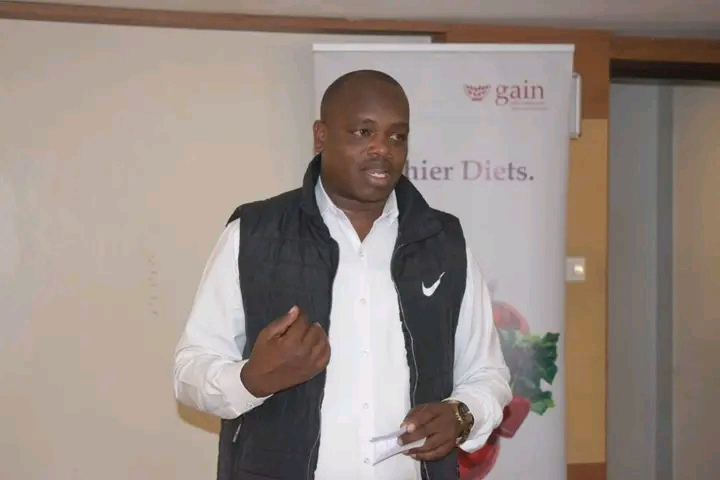
The engagement brought together representatives from government departments, farmers, private sector players, civil society, academia, development partners and other food systems actors to review the county’s food systems landscape and identify priority areas requiring collective action.
The stakeholders also discussed plans to establish an effective food systems governance and coordination structure that will provide a platform for different actors to work together in addressing challenges affecting food production, food security, nutrition, livelihoods and sustainability.
Agriculture County Executive Committee Member (CECM) Leonard Bor said strengthening food systems requires collaboration across different sectors rather than isolated interventions.
He underscored the importance of creating a functional coordination mechanism capable of aligning the activities of different stakeholders, addressing emerging challenges and supporting practical interventions across the county.
The discussions are expected to lead to the development and validation of Terms of Reference (ToRs) and an initial action framework for the proposed governance structures.
The framework will define the roles and responsibilities of participating stakeholders, establish coordination mechanisms and identify priority areas for advancing food systems transformation in Nakuru.
The move builds on existing efforts by the county to improve coordination within the agricultural sector. Nakuru’s County Agricultural Sector Steering Committee (CASSCOM) has previously been identified as an important platform for coordinating agricultural programmes and interventions involving different stakeholders.
According to the Agriculture State Department’s Agriculture Sector Development Support Programme, CASSCOMs are mandated to establish multidisciplinary structures for coordination of the agricultural sector at county level, develop accountability mechanisms and strengthen collaboration between public and private institutions.
Nakuru’s approach also comes against the backdrop of increasing calls for integrated planning as the county faces challenges linked to climate change, urban expansion, changing land-use patterns and food security.
In August 2026, stakeholders in Nakuru called for food systems, climate resilience and sustainable land use to be incorporated into the county’s 2028–2032 County Integrated Development Plan (CIDP). More than 100 county partners and stakeholders participated in discussions on priorities for the next development plan.
Chief Officer for Livestock, Fisheries and Veterinary Services Dr Michael Cheruiyot has previously highlighted the impact of climate change on agricultural production in the county.
“Climate change is so real, as we are speaking. There is a foreseen crop failure, particularly maize, and this is due to the global warming brought about by climate change. We must take action to mitigate climate change and protect food security,” Cheruiyot said during a policy dialogue in Nakuru.
He said the county needs to strengthen activities that support food security as it prepares its next development plan.
“From this workshop, we have come up with a communiqué which is going to be presented to the county government for further deliberation. So that as we develop the new CIDP, we will develop activities and factors to strengthen and assist in food security,” he said.
The need for stronger coordination has also been emphasised in discussions on climate-resilient food systems and sustainable land use.
A policy dialogue convened by the UN Sustainable Development Solutions Network (SDSN) Kenya, FOLU Kenya and the County Government of Nakuru in April 2026 brought together policymakers, researchers, development partners, civil society organisations and community representatives.
The dialogue identified fragmented policy frameworks and limited coordination between agriculture, land, environmental and climate policies as challenges requiring stronger institutional cooperation.
The discussions further highlighted the importance of involving communities and local actors in decision-making while strengthening partnerships between government, research institutions, development organisations and the private sector.
Michael Onchabo, FOLU Kenya Country Director, said evidence and research would be important in shaping future county policies.
“The two-day workshop in Nakuru County, together with many partners and stakeholders from various departments within the county government and local development partners, brought forward results from studies conducted by our consultants,” Onchabo said.
The county has also been pursuing measures to make its food system more resilient to climate-related shocks. Recent county initiatives have focused on climate-smart agriculture, crop diversification, irrigation and partnerships with research institutions and private-sector actors.
Bor has previously stressed the importance of collaboration between government, research institutions and private-sector organisations in helping farmers adopt sustainable agricultural practices.
“We are committed to working with research institutions, state agencies and private firms to have our farmers rear more heat-tolerant and disease-resistant livestock breeds,” Bor said in September 2026.
Food safety is another area where the county has pursued multi-stakeholder coordination. In 2024, Nakuru brought together government departments, KALRO, KEPHIS, farmer representatives, business organisations and other actors to deliberate on food and feed safety regulations.
Bor said food safety required cooperation across the entire food value chain.
“Awareness on the safety of food that Kenyans are feeding on is low and thus the need for food value chains to team up and undertake intensive induction,” he said.
The latest engagement therefore seeks to bring these different areas of the food system under a more coordinated framework.
The proposed governance structure is expected to provide a common platform for stakeholders to identify challenges, align interventions, share information and mobilise resources towards agreed priorities.
Also present during the engagement were Chief Officer for Livestock, Fisheries and Veterinary Services Dr Michael Cheruiyot, Chief Officer for Cooperatives Kibet Kurgat and Chief Officer for ICT, E-Government and Public Communication Gladys Kamuren.
The development of the ToRs and action framework will provide the basis for determining how the proposed structure will operate and how different actors will contribute to food systems transformation in Nakuru.
The engagement marks another step towards building a more coordinated food system in the county, with stakeholders seeking to link food production, markets, nutrition, environmental sustainability, climate resilience and livelihoods through collective action.

Author: Moureen Koech
Moureen Koech is a passionate Digital Journalist, an adept Agribusiness Writer with a keen eye for news and an impactful story-teller,whose stories provide key value to Agripreneurs and stakeholders in the Agricultural sector