Raising healthy, fast-growing goats is one of the most important goals for farmers keeping goats for meat. A heavier goat can fetch a better price, but weight gain should come from good nutrition, proper health management and good genetics, rather than shortcuts that may compromise the animal’s health.
The good news is that farmers do not always need expensive commercial feeds to improve goat growth. Proper use of pasture, fodder, crop residues, minerals and locally available feeds can make a significant difference.
1. Start with good genetics
Genetics plays an important role in how quickly a goat grows and how much weight it can eventually achieve.
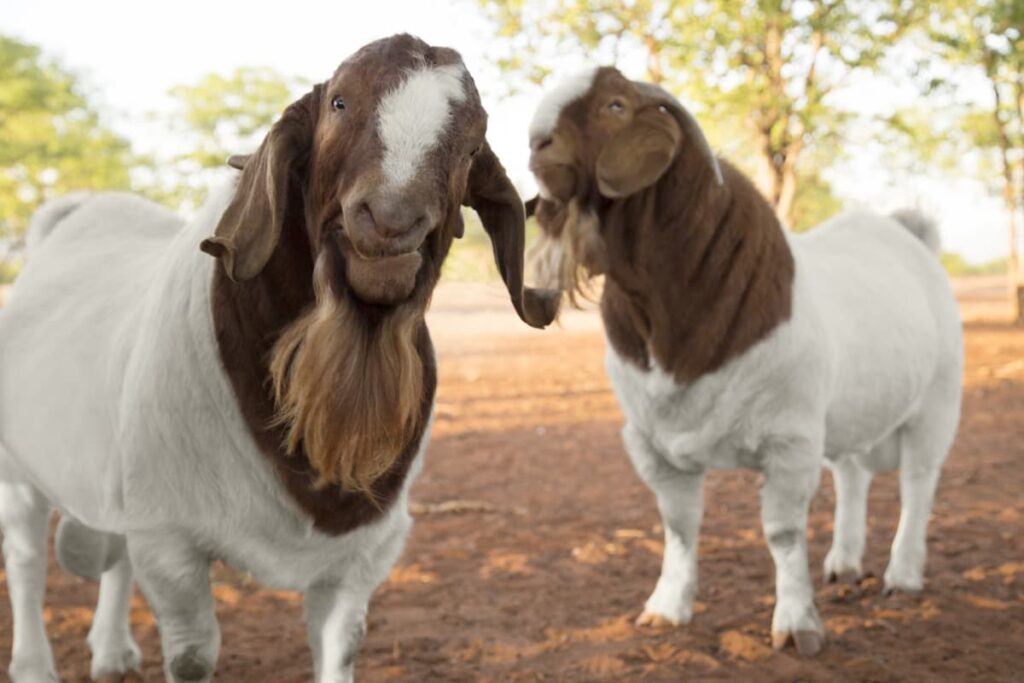
Meat-oriented breeds such as Boer goats are known for their growth and muscular development, while indigenous breeds can offer excellent adaptability to local conditions.
For farmers interested in improving their herd, carefully planned crossbreeding can combine desirable growth characteristics with the hardiness of local goats.
However, buying an expensive breed does not automatically guarantee fast growth. Genetics must be supported by good feeding and management.
2. Provide enough quality forage
Goats are natural browsers and can utilize a wide variety of leaves, shrubs and other vegetation.
Good-quality forage should form the foundation of the feeding programme. Farmers can provide suitable grasses, browse plants and fodder trees depending on what grows well in their area.
Avoid relying entirely on dry, poor-quality vegetation. Growing goats need enough nutrients to support muscle and bone development.
3. Give protein-rich feeds
Protein is particularly important for growing goats because it supports muscle development and tissue growth.
Farmers can supplement available forage with suitable protein-rich feeds, including some legume fodders and other locally available feed ingredients.
Examples of useful forage legumes can include desmodium, lucerne and sweet potato vines, provided they are grown and managed appropriately.
The exact feeding programme should depend on the goat’s age, size, production purpose and available feed resources.
4. Don’t forget energy
Protein alone will not produce good weight gain.
Growing goats also require sufficient energy to support growth and daily activities. Energy can come from good-quality forage and appropriate supplementary feeds.
If the goat’s diet is inadequate in energy, nutrients may be used simply to maintain the animal instead of supporting substantial weight gain.
A balanced diet is therefore more important than simply adding one particular feed.
5. Provide clean water at all times
Water is sometimes overlooked when farmers focus on feeds.
A goat that does not have adequate clean water may eat less and perform poorly.
Provide fresh, clean water regularly, particularly during hot weather and when goats are consuming dry feeds.
6. Provide mineral supplements
Minerals are essential for healthy growth, bones, reproduction and general body function.
A suitable mineral supplement or mineral lick can help goats obtain nutrients that may be lacking in available feeds.
However, farmers should avoid randomly giving large quantities of mineral products. Use products intended for goats and follow appropriate feeding instructions.
7. Control internal parasites
Heavy parasite infestations can significantly affect goat growth.
A goat may eat well but continue losing condition if parasites are interfering with nutrient absorption or causing blood loss.
Signs that may indicate a health problem include poor growth, weight loss, weakness, diarrhoea or a rough coat.
Farmers should work with a veterinarian or livestock professional to develop an appropriate parasite-control programme rather than repeatedly deworming animals without a clear plan.
8. Vaccinate and prevent disease
Disease can quickly stop weight gain.A sick goat will often eat less and use its available energy to fight the infection instead of growing.
Follow recommended vaccination programmes for diseases common in your area and maintain good hygiene in goat housing.
Early treatment of sick animals is also important.
9. Reduce feed competition
When too many goats are forced to share limited feed, weaker animals may fail to get enough nutrition.
Provide adequate feeding space and monitor smaller or younger goats to ensure they are getting their share.
Separating animals according to age or production needs can make feeding more effective.
10. Give growing goats special attention
Young goats have high nutritional requirements because they are still developing.
Kids should receive adequate milk during the appropriate early period and gradually transition to quality forage and other suitable feeds.
Weaned kids should have access to nutritious feed, clean water and minerals so that growth does not slow dramatically after weaning.
11. Use crop residues wisely
Farmers can reduce feed costs by using suitable crop residues as part of a balanced ration.
Materials such as maize stover, bean residues and other agricultural by-products can contribute to the feeding programme when properly handled.
However, poor-quality residues alone may not provide enough nutrients for rapid growth. They may need to be supplemented with higher-quality feeds.
12. Practice rotational grazing
If goats are grazing, rotational grazing can help prevent overuse of pasture.
Moving animals between grazing areas gives vegetation time to recover and can improve the quality of forage available to the herd.
It can also help reduce the buildup of some parasites when combined with good pasture management.
13. Keep goats in good housing
A goat house does not need to be expensive, but it should be clean, dry and well ventilated.
Poor housing can expose goats to damp conditions, parasites and respiratory problems, all of which can affect growth.
Good housing should also protect animals from extreme weather and allow enough space for movement and rest.
14. Reduce unnecessary stress
Stress can negatively affect feeding behaviour and growth.
Avoid overcrowding, rough handling and unnecessary movement of animals.
Provide goats with a relatively stable environment, adequate shelter and access to feed and water.
15. Monitor weight and body condition
Don’t rely entirely on your eyes to determine whether goats are gaining weight.
Where possible, weigh animals regularly. If a weighing scale is unavailable, farmers can monitor body condition and use consistent measurements such as heart-girth measurements as a practical indicator of changes in size.
Keeping records helps you identify which animals are growing well and which ones may need additional attention.
A simple feeding strategy
A practical approach is to divide the goat’s feeding programme into three broad components:
Forage: Good-quality grass, browse and fodder plants.
Protein: Suitable legumes and other protein-rich feeds.
Energy: Appropriate grains or other energy sources where necessary.
Add clean water and suitable minerals to complete the basic management programme.
The exact quantities should be adjusted according to the goat’s age, body weight, breed and production stage. A livestock nutritionist or veterinarian can help formulate a balanced ration where intensive feeding is being used.
Don’t make these weight-gain mistakes
Some farmers make the mistake of giving goats large amounts of grain in an attempt to make them gain weight quickly. Sudden dietary changes or excessive concentrates can cause digestive problems.
Another mistake is ignoring disease because the farmer assumes the animal simply needs more food.
If a goat is eating but failing to gain weight, investigate possible causes such as parasites, disease, poor-quality feed or dental problems instead of continuously increasing feed.
Increasing goat weight naturally is mainly about good genetics, adequate nutrition, clean water, mineral supplementation, parasite control, disease prevention and proper management.
You don’t necessarily need expensive feeds to raise productive goats. A well-planned feeding programme based on quality forage and locally available nutritious feeds can significantly improve growth while keeping production costs under control.
Most importantly, aim for healthy and sustainable weight gain, not rapid weight gain at the expense of the animal’s health.A well-fed goat is not necessarily the goat receiving the most feed, it is the goat receiving the right nutrients in the right amounts, consistently.

Author: Moureen Koech
Moureen Koech is a passionate Digital Journalist, an adept Agribusiness Writer with a keen eye for news and an impactful story-teller,whose stories provide key value to Agripreneurs and stakeholders in the Agricultural sector