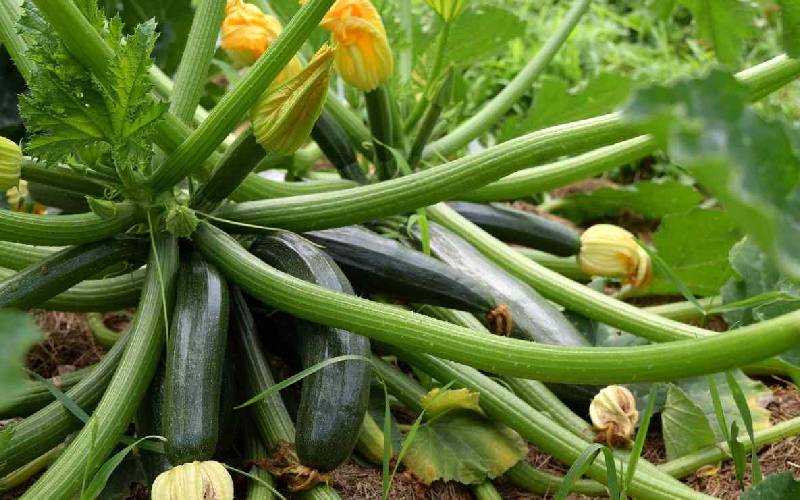
Courgette farming, commonly known as zucchini farming, has emerged as one of the most profitable vegetable enterprises in Kenya due to its short maturity period, continuous harvesting cycle, and strong market demand. Farmers looking for quick returns on investment are increasingly turning to this crop because it begins generating income within a short period compared to many traditional crops.
The crop performs well under different farming systems, from small kitchen gardens to large commercial farms. With proper crop management, courgette can provide continuous harvests for several weeks, making it an excellent option for farmers seeking consistent cash flow.
Why Courgette farming is growing in popularity
One of the biggest advantages of growing courgettes is the speed at which the crop matures. Under favourable conditions, harvesting starts approximately two to two and a half months after planting. Unlike crops that are harvested once, courgette continues producing fruits for another two to three months after the initial harvest.
Market demand for courgettes has also increased significantly. The vegetable is widely used in homes, supermarkets, restaurants, hotels and fresh produce markets because of its versatility in cooking and nutritional value. This steady demand creates income opportunities for farmers throughout the growing season.
Climate requirements for courgette farming
Courgettes thrive in warm conditions with adequate sunlight and moderate temperatures. The crop performs best in temperatures ranging between 15°C and 22°C. Excessive cold slows growth, while extreme heat may reduce fruit quality and flower production.
In Kenya, courgettes grow well in areas located between 500 and 2,000 metres above sea level. Farmers should select areas with reliable water access, especially during dry periods, to maintain healthy crop growth and maximize yields.
Suitable soil for growing courgettes
Successful courgette production begins with selecting the right soil. The crop performs best in fertile, well-drained soils rich in organic matter. Sandy-loam and loamy soils are ideal because they retain sufficient moisture while allowing proper drainage.
The recommended soil pH ranges between 5.5 and 7.0. Before planting, farmers are encouraged to conduct soil testing to determine nutrient levels and make the necessary adjustments through manure or fertilizer application.
Land preparation and planting
Proper land preparation is essential for healthy crop establishment. Farmers should clear weeds, plough the land thoroughly and prepare raised beds or mounds to improve drainage.
Planting holes should be enriched with well-decomposed manure before sowing seeds. Courgette seeds are usually planted directly into the field rather than transplanted.
Recommended spacing is approximately 60 centimetres between plants and 100 centimetres between rows. Adequate spacing allows proper airflow, reduces disease spread and gives plants enough room for fruit development.
Irrigation and water management
Although courgettes require consistent moisture, excessive watering can lead to disease outbreaks and reduced productivity. Water requirements increase during flowering and fruit formation.
Drip irrigation is highly recommended because it delivers water directly to the root zone while keeping leaves dry. This helps reduce fungal infections and improves water efficiency.
Mulching around the plants can also help conserve moisture, suppress weeds, and maintain stable soil temperatures.
Fertilizer application for higher yields
Courgettes require adequate nutrients throughout their growth cycle to produce quality fruits and maintain continuous harvesting.
During land preparation, farmers should apply organic manure to improve soil fertility. Nitrogen-rich fertilizers support vegetative growth during the early stages, while phosphorus encourages root development.
As flowering and fruiting begin, potassium becomes important because it enhances fruit formation and overall crop quality. Splitting fertilizer application throughout the season often delivers better results.
Pest and disease management
Like many vegetables, courgettes are vulnerable to pests and diseases that can significantly reduce yields if not controlled early.
Common pests include aphids, whiteflies, red spider mites and cutworms. These pests feed on leaves and may spread diseases.
Common diseases affecting courgettes include powdery mildew, downy mildew, bacterial wilt and blossom end rot. Farmers can reduce disease pressure through proper spacing, field hygiene, crop rotation, and avoiding overhead irrigation.
Regular scouting allows early detection and timely control measures.
Harvesting Courgettes
Courgettes are harvested while still young and tender to maintain market quality and encourage further fruit production. Harvesting usually begins around 60 to 75 days after planting.
Fruits should be picked when they reach approximately 10 to 20 centimetres in length. Harvesting should be done frequentlyabout three times per week to stimulate the plant to continue producing new fruits.
Delaying harvesting results in oversized fruits and reduces overall productivity.
Profitability and market opportunities
Courgette farming offers attractive returns because of the crop’s short production cycle and multiple harvests. Farmers can earn regular income throughout the season instead of waiting for one major harvest.
Market opportunities exist in local open-air markets, supermarkets, restaurants, hotels, grocery stores and vegetable distributors. Farmers who maintain quality standards and consistent supply often access premium markets.
Value addition through sorting, packaging, and direct supply agreements can further increase profitability.
Courgette farming remains one of the most promising short-cycle vegetable enterprises in Kenya. Its quick maturity, extended harvesting period and strong market demand make it suitable for both new and experienced farmers.
With proper land preparation, irrigation, fertilization and pest management, farmers can transform courgette production into a reliable and profitable agribusiness venture.

Author: Moureen Koech
Moureen Koech is a passionate Digital Journalist, an adept Agribusiness Writer with a keen eye for news and an impactful story-teller,whose stories provide key value to Agripreneurs and stakeholders in the Agricultural sector