Tomato farming can be highly rewarding, but diseases are among the biggest challenges farmers face. A healthy tomato crop can suddenly develop spots, wilt, yellow leaves or rotting fruits, leading to reduced yields and serious financial losses.
The good news is that many tomato diseases can be reduced through prevention, good farm hygiene, resistant varieties, proper watering and early detection. Waiting until a disease has spread throughout the farm often makes control much more difficult and expensive.
Understanding the common diseases and knowing what to do early can therefore save farmers money and protect their harvest.
1. Early Blight
Early blight is a common fungal disease that affects tomato leaves, stems and fruits. It usually begins with small dark spots on older leaves. As the disease progresses, the spots enlarge and may develop concentric rings, eventually causing affected leaves to turn yellow and fall.
Severe infections reduce the plant’s ability to produce food, which can affect fruit development.
How to Control Early Blight
Farmers should remove heavily infected plant material and avoid leaving diseased leaves around the field. Crop rotation can also help reduce the buildup of disease-causing organisms in the soil.
Avoid watering the foliage unnecessarily, particularly late in the day. Good spacing between plants improves air circulation and allows leaves to dry more quickly.
Where fungicides are necessary, farmers should use products approved for tomatoes and follow the label instructions carefully.
2. Late Blight
Late blight can spread rapidly, especially under cool and wet conditions. It causes dark, water-soaked lesions on leaves and stems and can also produce brown or dark lesions on fruits.
A severe outbreak can destroy a tomato crop within a short period.
How to Control Late Blight
Regularly inspect the crop, especially during periods of cool, wet weather. Remove and properly dispose of infected plant material.
Avoid excessive moisture around the plants and provide adequate spacing for air movement.
Farmers should also consider disease-tolerant or resistant varieties where available and use appropriate fungicides when recommended.
Early action is extremely important because late blight can spread quickly.
3. Bacterial Wilt
Bacterial wilt is particularly serious because affected plants can wilt rapidly even when the soil appears to have sufficient moisture.
A characteristic sign is sudden wilting without the leaves necessarily turning yellow first. In advanced cases, the entire plant collapses.
How to Control Bacterial Wilt
Prevention is generally more effective than trying to rescue severely infected plants.
Use healthy planting materials and avoid moving contaminated soil from one part of the farm to another. Remove infected plants and manage them properly rather than leaving them in the field.
Crop rotation can help reduce disease pressure. Farmers should also avoid planting tomatoes repeatedly in the same soil where bacterial wilt has been a persistent problem.
4. Fusarium Wilt
Fusarium wilt is caused by a soil-borne fungus. Infected plants may develop yellowing leaves, wilting and reduced growth. Symptoms can begin on one side of the plant before becoming more widespread.
The disease can survive in soil for long periods, making it difficult to eliminate once established.
How to Control Fusarium Wilt
Use certified or healthy planting materials and select varieties with appropriate resistance where available.
Crop rotation can help, although the effectiveness depends on the crops involved and the persistence of the pathogen in the soil.
Good field sanitation is also important. Avoid moving contaminated soil, tools or plant material between fields.
5. Powdery Mildew
Powdery mildew appears as a white, powder-like growth on leaves and sometimes stems. Infected leaves may become distorted, yellow or dry out.
Although the disease may not always destroy the entire crop, severe infections can reduce plant growth and productivity.
How to Control Powdery Mildew
Ensure adequate spacing between plants and remove severely affected leaves where practical.
Avoid creating excessively humid conditions around the crop. Monitor the plants regularly so that treatment can begin before the disease becomes widespread.
Where chemical control is necessary, use an appropriate approved fungicide according to label instructions.
6. Septoria Leaf Spot
Septoria leaf spot mainly affects the leaves and can cause numerous small, circular spots with dark edges. Severe infections may cause leaves to fall prematurely.
The disease can reduce the plant’s ability to produce food, particularly when large numbers of leaves are affected.
How to Control Septoria Leaf Spot
Remove infected plant debris after harvesting and avoid working with wet plants because moisture can contribute to disease spread.
Use proper spacing and avoid overhead irrigation where possible.
Crop rotation and appropriate fungicide use can also help manage the disease.
7. Tomato Mosaic Virus
Viral diseases can cause mottled or mosaic-like patterns on leaves, distorted growth and reduced fruit production.
Viruses can be particularly difficult to control because there are no simple treatments that can cure an infected plant.
How to Control Viral Diseases
The focus should be on prevention.
Use healthy seedlings and control insect vectors such as aphids and other pests that can spread some viruses. Remove suspicious or infected plants promptly where appropriate.
Farm workers should maintain good hygiene and clean tools between operations, particularly when handling multiple plants.
8. Blossom-End Rot
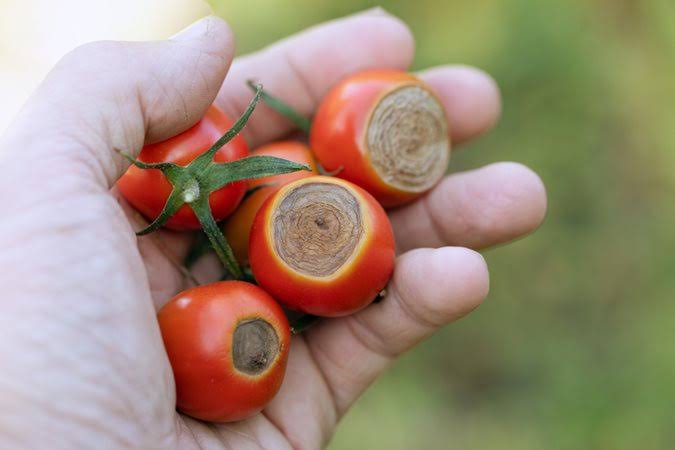
Blossom-end rot is different from many other tomato problems because it is not caused by an infectious organism. It appears as a dark, sunken area at the bottom of the fruit.
It is commonly associated with inadequate calcium availability to developing fruit, often linked to inconsistent water supply and root stress.
How to Prevent Blossom-End Rot
Maintain consistent soil moisture and avoid allowing plants to repeatedly dry out and then receive large amounts of water.
Use mulch to help maintain more stable soil moisture. Ensure adequate soil fertility and avoid excessive fertilizer applications that can interfere with balanced plant growth.
If the underlying problem is inconsistent water management, simply adding calcium may not solve the issue.
General practices for preventing tomato diseases
Disease management should begin before the first symptoms appear.
Start with healthy seedlings
Diseases can enter a farm through infected seeds or seedlings. Purchase planting materials from reliable sources and avoid planting visibly weak or diseased seedlings.
Give plants enough space
Overcrowded tomatoes create a humid environment where some diseases can spread more easily.
Follow spacing recommendations appropriate for the variety and production system.
Avoid excessive leaf wetting
Where practical, use drip irrigation or direct water toward the soil instead of repeatedly wetting the foliage.
Watering early in the day can also give plants more time to dry.
Rotate crops
Growing tomatoes continuously in the same field can increase the buildup of soil-borne diseases.
Where possible, rotate tomatoes with crops that are not hosts for the same diseases.
Remove diseased plants
Do not allow severely infected plants to remain in the field indefinitely.
Remove affected material appropriately and avoid putting diseased plants into compost unless you are certain the composting process will destroy the pathogens.
Control weeds
Some weeds can host pests and pathogens that affect tomatoes. Keeping the field clean can therefore reduce potential sources of infection.
Monitor the farm regularly
Walk through your tomato field frequently and inspect leaves, stems, roots and fruits.
Look for unusual spots, wilting, yellowing, mould, distorted leaves and fruit abnormalities.
Early detection is often cheaper and more effective than trying to control a disease after it has spread across the entire farm.
Don’t confuse diseases with pests or nutrient problems
Not every yellow leaf or damaged tomato is caused by a disease.
Nutrient deficiencies, insect damage, water stress and poor soil conditions can produce symptoms that look similar to diseases.
Before applying chemicals, farmers should try to identify the actual cause of the problem. When uncertain, consult an agricultural extension officer, crop specialist or qualified agronomist.
Common tomato diseases such as early blight, late blight, bacterial wilt, Fusarium wilt, powdery mildew, Septoria leaf spot and viral diseases can significantly reduce production if they are not managed properly.
The best strategy is not to wait until the crop is heavily infected. Farmers should begin with healthy planting materials, maintain good spacing, manage water carefully, rotate crops, remove infected plants and monitor the field regularly.
Chemical control may be necessary for some diseases, but it should be based on proper identification and products registered for the intended use.
Healthy tomatoes start with prevention. A farmer who spots problems early has a much better chance of protecting the crop and the profits behind it.

Author: Moureen Koech
Moureen Koech is a passionate Digital Journalist, an adept Agribusiness Writer with a keen eye for news and an impactful story-teller,whose stories provide key value to Agripreneurs and stakeholders in the Agricultural sector