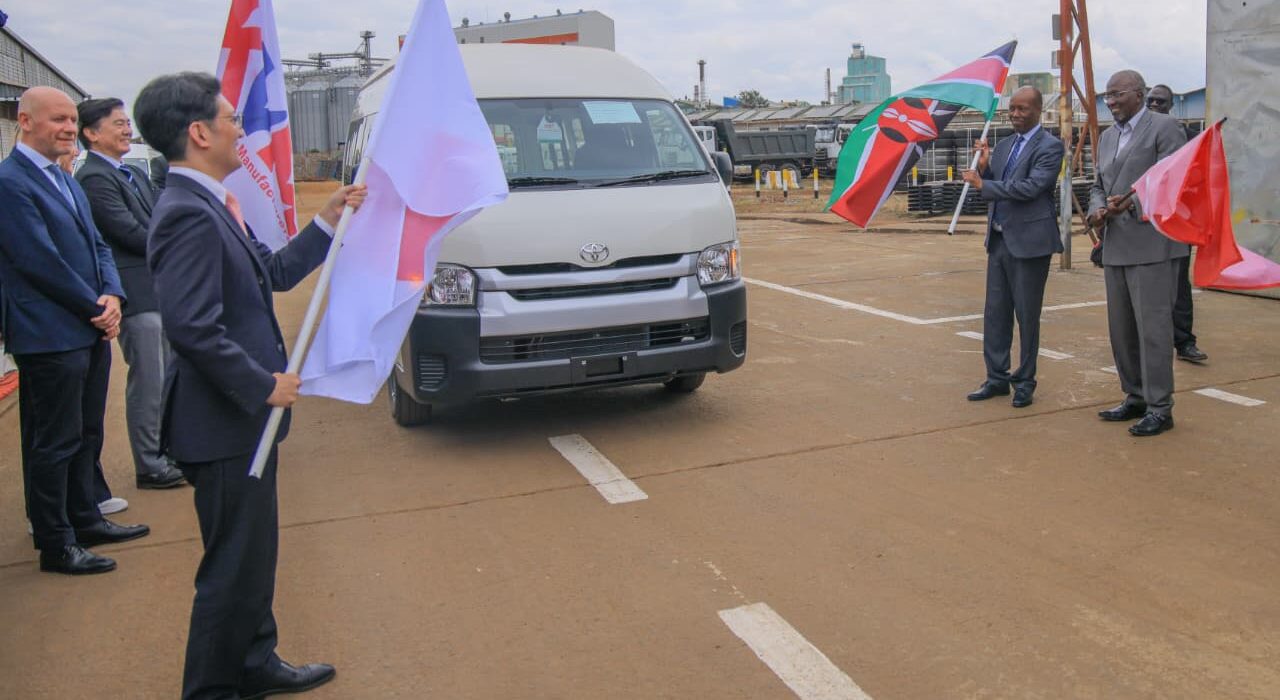
Kenya has officially launched the local assembly of the Toyota Hiace matatu at the Kenya Vehicle Manufacturers (KVM) plant in Thika, marking a significant milestone in the country’s push to strengthen industrial growth, expand local manufacturing and create employment opportunities within the automotive sector.
The event, which was officiated by Cabinet Secretary for Investments, Trade and Industry Hon. Lee Kinyanjui, brought together key stakeholders including CFAO Mobility Kenya and financial partners such as Unaitas Sacco, highlighting the growing collaboration between government, industry players, and the financial sector in advancing Kenya’s mobility ecosystem.
For many Kenyans, the Toyota Hiace is more than just a vehicle. Since the 1990s, it has played a central role in transforming public transport after gradually replacing the older “face me” vans. Over the years, it has become one of the most widely used vehicles in the matatu sector, valued for its reliability, comfort, and efficiency in passenger transport across the country.
The launch of local assembly at KVM Thika represents a shift from decades of reliance on imported units to a new era of domestic production. This move is expected to strengthen Kenya’s industrial base while reducing dependence on imported vehicles. It also forms part of the government’s broader agenda to promote value addition, industrialization and job creation.
Speaking during the launch, CS Lee Kinyanjui emphasized that the initiative goes beyond vehicle assembly and is aimed at building long-term economic value for the country.
“This is more than the assembly of a vehicle. It is about creating jobs, strengthening local industries, building technical skills, and growing Kenya’s manufacturing capacity,” he said.
The government noted that Kenya Vehicle Manufacturers has already created employment opportunities for more than 200 workers, with additional jobs expected as production increases. The initiative is also expected to stimulate demand for locally produced automotive components, opening up opportunities for suppliers, manufacturers and small and medium enterprises to participate in the value chain.
Unaitas Sacco also participated in the launch, reaffirming its commitment to supporting individuals and businesses in acquiring vehicles through flexible asset financing solutions. The Sacco said it offers up to 100 percent financing for commercial vehicles including PSVs, school vans, church vans, courier vans and tour vans, helping more Kenyans access mobility assets and grow their businesses.
“We were honoured to attend the CFAO Mobility Kenya launch of the locally assembled Toyota Hiace Van at the Kenya Vehicle Manufacturers (KVM) plant in Thika, officiated by Cabinet Secretary for Investments, Trade and Industry Hon. Lee Kinyanjui,” Unaitas said.
“At Unaitas, we are committed to helping individuals and businesses acquire vehicles through up to 100% asset financing. We finance PSVs, school vans, church vans, courier vans, tour vans and other commercial vehicles.”
The Sacco further emphasized that partnerships with manufacturers such as CFAO Mobility Kenya are key in supporting innovation, expanding access to mobility solutions, and strengthening Kenya’s transport and logistics sector.
“We thank CFAO Mobility Kenya for the partnership and for supporting innovation and growth in Kenya’s mobility sector,” the institution added.
Industry players say the local assembly of the Toyota Hiace will also strengthen Kenya’s automotive value chain by creating demand for locally manufactured components and increasing participation of SMEs in supply, logistics and servicing networks.
The Toyota Hiace has remained a dominant force in Kenya’s public transport and commercial mobility space, serving matatu operators, institutions, courier services, and businesses for decades. Local assembly is expected to improve availability, support affordability, and enhance technical capacity within the sector.
The government continues to position Kenya as a regional automotive manufacturing hub through policies aimed at promoting local production, reducing imports and expanding industrial capacity. With increasing collaboration between the public sector, private industry and financial institutions, stakeholders say the country is steadily moving toward a more self-sustaining automotive ecosystem.

Author: Moureen Koech
Moureen Koech is a passionate Digital Journalist, an adept Agribusiness Writer with a keen eye for news and an impactful story-teller,whose stories provide key value to Agripreneurs and stakeholders in the Agricultural sector