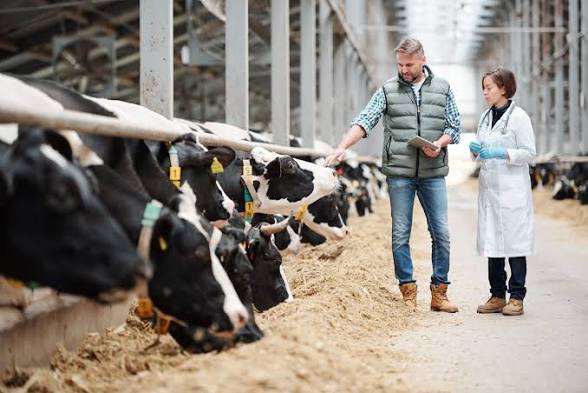
Artificial Insemination (AI) has transformed dairy farming by enabling farmers to improve the genetic quality of their herds without keeping breeding bulls. Today, AI is one of the most widely used breeding technologies in the dairy industry because it is cost-effective, safe, and highly efficient when properly managed. In Kenya and many other countries, dairy farmers are increasingly adopting artificial insemination to produce high-yielding cows, improve herd productivity and increase farm profitability.
Unlike natural mating, artificial insemination involves collecting semen from genetically superior bulls, processing and preserving it under controlled conditions and then depositing it into the reproductive tract of a cow using specialized equipment. This method allows farmers to access world-class dairy genetics at a fraction of the cost of purchasing expensive breeding bulls.
This guide explains how artificial insemination works, its benefits, the insemination process, factors affecting success and best management practices for dairy farmers.
What is Artificial Insemination?
Artificial insemination is a controlled breeding technique where semen collected from a selected bull is manually introduced into a cow’s reproductive tract at the appropriate stage of her reproductive cycle.
The semen is usually frozen in liquid nitrogen and stored in small plastic straws until needed. Qualified AI technicians thaw the semen and inseminate cows when they are in heat to maximize the chances of successful fertilization.
The technique has become an important tool for improving dairy cattle breeds such as Friesian, Ayrshire, Jersey, Guernsey and crossbreeds commonly kept by Kenyan farmers.
Benefits of Artificial Insemination
Artificial insemination offers numerous advantages that make it preferable to natural mating for many dairy farmers.
One of the greatest benefits is rapid genetic improvement. Farmers can use semen from proven bulls with excellent records for milk production, fertility, disease resistance, udder quality and longevity. This allows future generations of calves to inherit desirable traits that improve herd performance.
AI also eliminates the need to keep breeding bulls on the farm. Maintaining bulls is expensive because they require housing, feeding, healthcare and careful handling due to their aggressive nature. By using AI services, farmers save money while reducing safety risks.
Another advantage is disease control. Natural mating can spread reproductive diseases between animals, whereas properly handled AI significantly reduces this risk.
Artificial insemination also gives farmers access to superior international and local genetics that would otherwise be unavailable or unaffordable.
How Artificial Insemination Works
The AI process begins with selecting genetically superior bulls. Semen is collected under hygienic conditions using specialized equipment and evaluated for quality, concentration and sperm motility.
Only high-quality semen is processed, diluted with protective solutions, packaged into straws, frozen, and stored in liquid nitrogen at approximately -196°C.
When a cow shows signs of heat, the AI technician retrieves the semen straw, thaws it carefully, loads it into an insemination gun, and deposits the semen into the cow’s reproductive tract using sterile procedures.
If insemination is performed at the correct time, fertilization occurs naturally inside the cow.
Detecting heat is critical
Successful artificial insemination depends heavily on accurate heat detection. Cows should be inseminated only when they are in estrus, the period during which they are receptive to mating and capable of conceiving.
The most reliable sign is standing heat, where a cow remains standing while another animal attempts to mount her.
Other signs include increased restlessness, mounting other cows, swollen and reddened vulva, clear mucus discharge, reduced feed intake, frequent bellowing, and decreased milk production.
Farmers should observe cows early in the morning and late in the evening when heat signs are usually more visible.
The best time for insemination
Timing is one of the most important factors affecting conception rates.
A commonly used guideline is the AM-PM rule. Cows observed in heat during the morning should be inseminated in the evening, while cows first seen in heat during the evening should be inseminated the following morning.
This timing allows sperm sufficient time to reach the egg before ovulation occurs, increasing the likelihood of successful fertilization.
Factors affecting AI success
Several factors influence conception rates after artificial insemination.
Proper heat detection is perhaps the most important. Missing or misinterpreting heat signs often results in failed insemination.
The skill of the AI technician also plays a significant role. Correct semen handling, proper thawing procedures, hygienic practices, and accurate semen placement improve conception success.
Cow health is equally important. Animals suffering from reproductive infections, nutritional deficiencies, parasites, or other illnesses often have lower fertility.
Body condition also matters. Extremely thin or overly fat cows generally have reduced reproductive performance compared to animals in good body condition.
Nutrition and fertility
Balanced nutrition is essential for successful breeding.
Dairy cows require adequate energy, protein, vitamins and minerals to maintain normal reproductive function. Deficiencies in phosphorus, selenium, copper, and other minerals may delay heat cycles or reduce conception rates.
Fresh, clean water should always be available because dehydration negatively affects both milk production and reproductive performance.
Proper feeding before and after insemination supports healthy pregnancies and calf development.
Pregnancy diagnosis
After insemination, farmers should continue monitoring cows for signs of returning to heat.
If a cow does not return to heat within approximately 18 to 24 days, pregnancy is possible. Veterinary pregnancy diagnosis using rectal palpation or ultrasound is usually performed about 35 to 60 days after insemination.
Early pregnancy diagnosis allows farmers to identify non-pregnant cows and schedule repeat insemination promptly.
Common challenges
Although artificial insemination offers many benefits, farmers may encounter several challenges.
Poor heat detection remains the leading cause of failed conception. Inadequate nutrition, reproductive diseases, poor semen handling, inexperienced technicians, and incorrect insemination timing also reduce pregnancy rates.
Limited access to qualified AI technicians in some rural areas may delay insemination and reduce success.
Regular veterinary support and good herd management help overcome these challenges.
Best practices for successful Artificial Insemination
Farmers should keep accurate breeding records showing heat dates, insemination dates, semen batch numbers, pregnancy diagnosis results, and expected calving dates.
Observe cows several times daily for heat signs and contact AI technicians immediately once heat is detected.
Maintain balanced nutrition, implement regular vaccination and parasite control programs, and minimize stress caused by overcrowding, poor housing, or transportation.
Working closely with experienced veterinarians and certified AI service providers significantly improves breeding success.
Economic benefits of Artificial Insemination
Artificial insemination contributes directly to higher farm profitability by producing cows with improved milk yields, better fertility, longer productive lives, and improved disease resistance.
Farmers save money by avoiding the costs associated with maintaining breeding bulls while simultaneously improving the genetic quality of their herds.
Over time, genetically superior cows produce more milk, healthier calves, and higher incomes, making AI one of the most valuable investments in modern dairy farming.
Artificial insemination has become an essential technology for improving dairy cattle production. It enables farmers to access superior genetics, improve milk yields, reduce breeding costs, minimize disease transmission, and enhance overall herd productivity.
However, successful AI depends on accurate heat detection, proper timing, skilled technicians, balanced nutrition, good animal health and effective record keeping. By adopting these best practices, dairy farmers can significantly increase conception rates, produce high-performing cows and build a more profitable and sustainable dairy enterprise.

Author: Moureen Koech
Moureen Koech is a passionate Digital Journalist, an adept Agribusiness Writer with a keen eye for news and an impactful story-teller,whose stories provide key value to Agripreneurs and stakeholders in the Agricultural sector